
The Sideways Spill
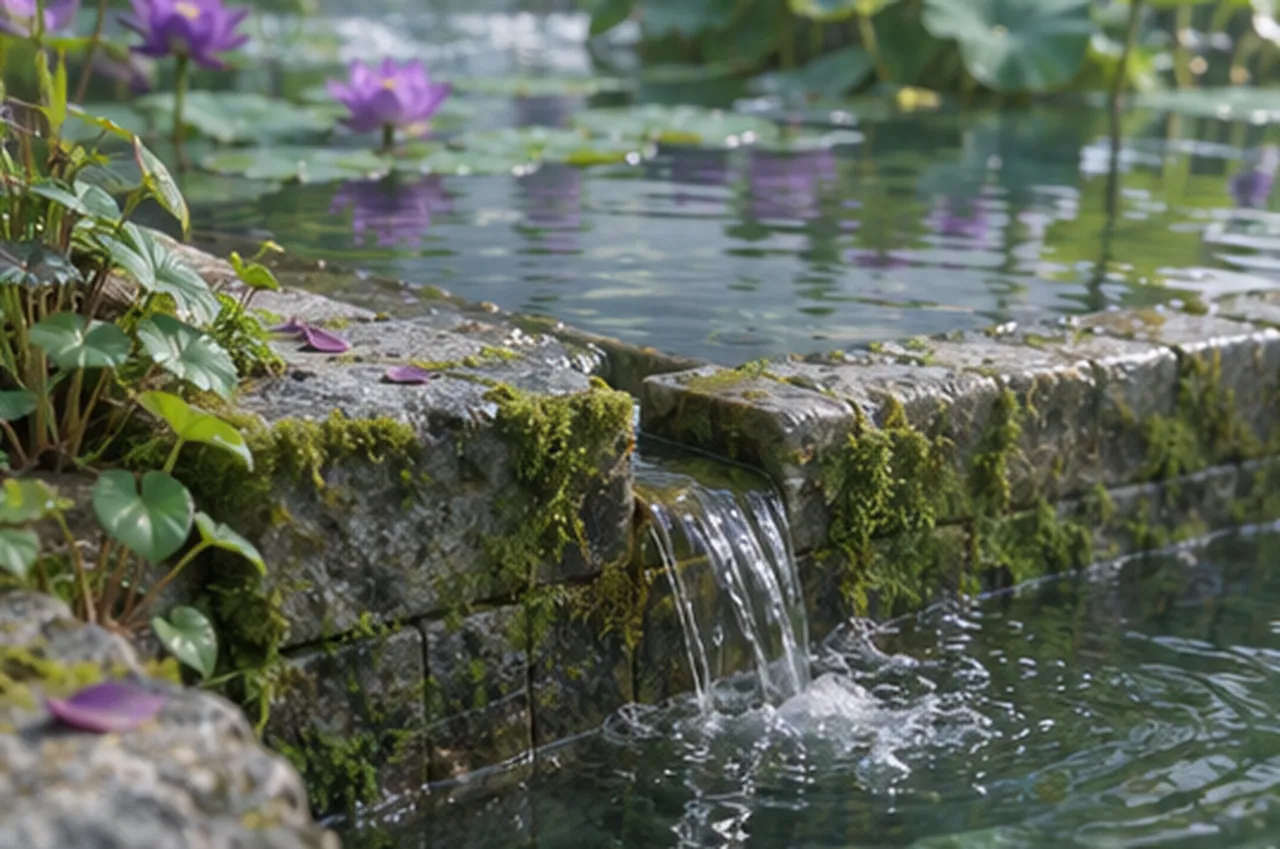
The water that leaves a low gate passes near the surface of an older stone. In the original view it seemed to continue straight into the next basin. At the edge of the wider view we could see another small strip of motion reaching a reed bed on one side. That little sideways turn gave the keeper more information about where the first part of the flow had gone. We developed a test with a short gate and a quiet near pool to see at what point a person can find the turn without having to read a complete map of the water system.
Fix the sharp side of the frame
One part of the gate is just high enough to cast a short shadow. The stream begins along a flatter section farther down the bank. From above it can look like a change in the edge of the dark patch. In a lower working view the stream starts to show a separate face. A small pale reflection travels along the stone for a little while. The keeper can check where the reflection ends before trying another opening. We use a nearly unchanged part of the shade next to it as a reference so that a short change in the light itself does not become an apparent path change.
The fastest version of the first pass made the reflection run straight toward the neighboring reeds. There was a clear result after the change, and little view of how it began. A slower pass preserves a little time in which the sideways movement is separate from the old front line. It becomes easier to tell that the current is following the newly opened part of the gate. We kept the earlier cut nearby in the scene. A player can compare the two before choosing how much of the water should leave through the new side.
Watch what the neighboring basin does
The larger view of the second pool shows an opening reflection near the wall. Farther around its perimeter a separate group of stems still casts a calm shadow. We want the keeper to be able to move between the two views without losing the connection between the first spill and the brighter part of the basin. In a first draft we used the same lighting effect across the whole basin surface. It made the result spectacular but did not show the relationship between position and timing. Limiting the most obvious movement to a small area helps the viewer identify what the first opening actually reached.
One more test keeps the flow unchanged and moves the camera closer to a reed. The shadow of the reed briefly falls across the area where the side stream enters. The player can look past it when the other end of the stone reappears. It is a helpful reminder that the smaller change can have a visible location even when the strongest contrast has moved. We keep the view of the neighboring basin on the same route, so checking one observation does not send the keeper to an unrelated part of the garden.
Leave another view available
Reed Gate Spill presents this first turn as one possible result when the lower pool begins to receive water. A Marker at the Low Outlet explores a reference that can remain visible after the wider motion has begun. Where the Shallow Water Waits gives another example of a small channel whose effect takes time to reach the next scene. For the next study, we will compare less and more opening while the near angle stays the same. The slower choice needs to leave a clear beginning, and the faster choice needs to offer an observation after the first visible part of the spill has joined the larger water.