
Reed Gate Spill
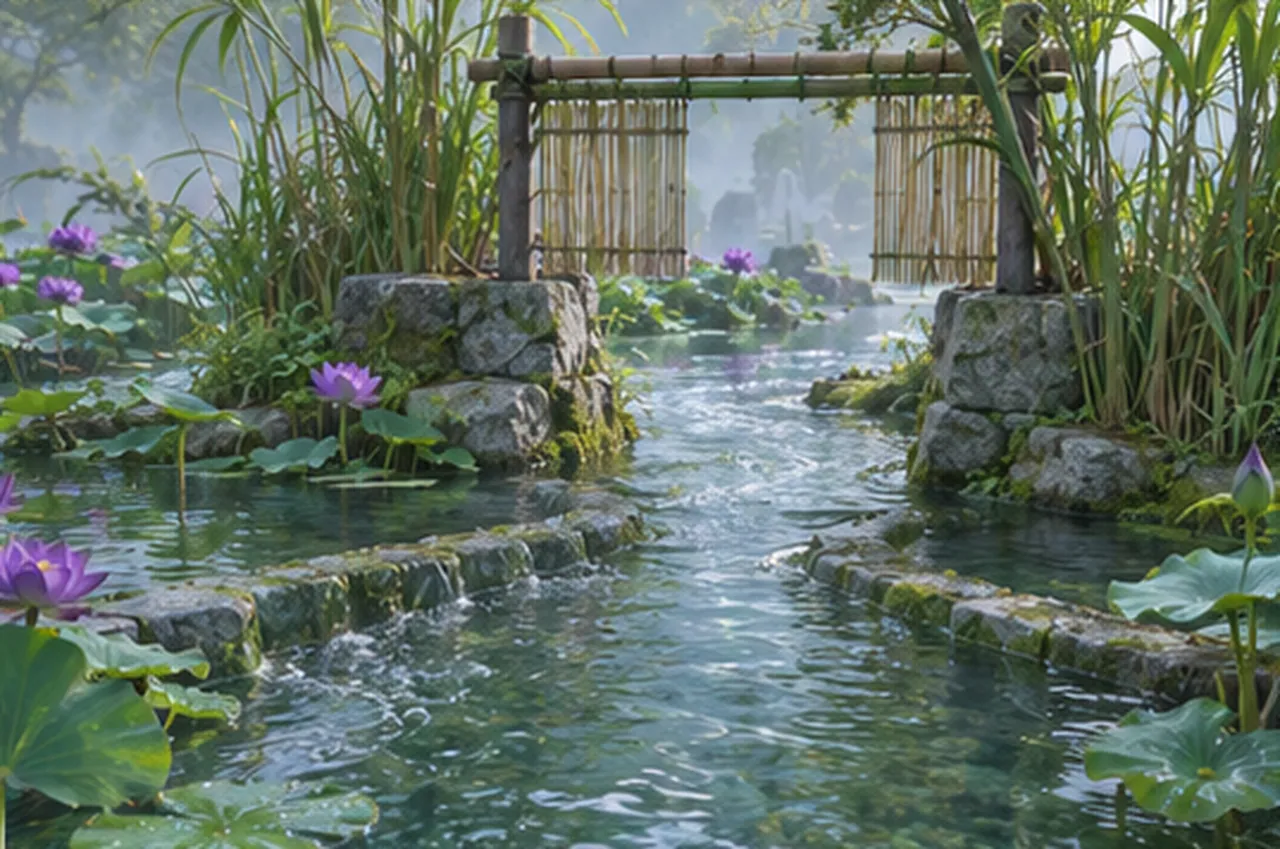
A little stream enters the first garden pool through a cut between stone and a low bed of reeds. A second basin lies beside it. Under ordinary conditions some water can find the lower one, but the current in the original view bends back toward the gate. Reed Gate Spill is an original game concept about restoring a useful connection without treating the two pools as one surface. The keeper can move the first opening or work on the low gate. At each stage you can compare a nearby outlet with a wider result around the two basins.
Decide where the overflow can start
At the beginning the near gate has space along its outer edge. Open a small passage and there is a visible change where the stream touches one end of the reed bed. The keeper can slow down and compare that change from above before doing more work. A more open passage gives the first basin another path to drain. It may move water to the far pool quickly, with a less precise indication of which part of the outlet is doing the work. The gradual version makes it easier to read the plain marker near the stone and take another step while the earlier surface is still familiar.
The two fictional pools have different depths. Their color may appear close while the keeper is looking through a moving reflection. You can look toward a small float near the outlet and see whether it has begun crossing the path you recognize. After the change, you may find it beside a differently lit stone. We leave the earlier margin in view so you can decide whether the float traveled with the water or just appears elsewhere from a new viewpoint. The choice should feel connected to the gate instead of an obligation to track every patch of brighter water in the scene.
A quieter part of the garden
The surrounding banks stay broad and quiet. Green reeds provide a clear shadow close to the gate. A distant lotus is visible as a violet spot just beyond the outer edge. The game keeps that difference after one of the pools brightens. A pale submerged step can guide the player back to the lower view during the transfer. If more water enters the second basin, a shallow corner along the gate may take longer to change. We show the two effects in separate views so a player can identify where they ought to look on their next round.
The final section returns the keeper to an opening above the narrower cut. Two water states are visible there. The nearer pool carries a broader reflection. The second has a small patch of clear motion near a root. One result suggests more work beside the gate. Another is enough to leave for a check later. We want both sequences to explain the relationship between the pools in terms of where the water went and which markers the keeper saw along its route. The flower’s eventual movement should follow that work in the player’s understanding.
The first branch prototype
Reed Gate Spill is in development around a single fictional branch between two ponds. The Sideways Spill checks where a small stream first separates from the wall. A Marker at the Low Outlet describes a way to preserve that observation when the surface changes. The next test will check an alternative position of the marker without changing the landscape around both basins. The game needs to show whether a player can read the same movement in a narrow place and in the wider garden afterward.