
A Marker at the Low Outlet
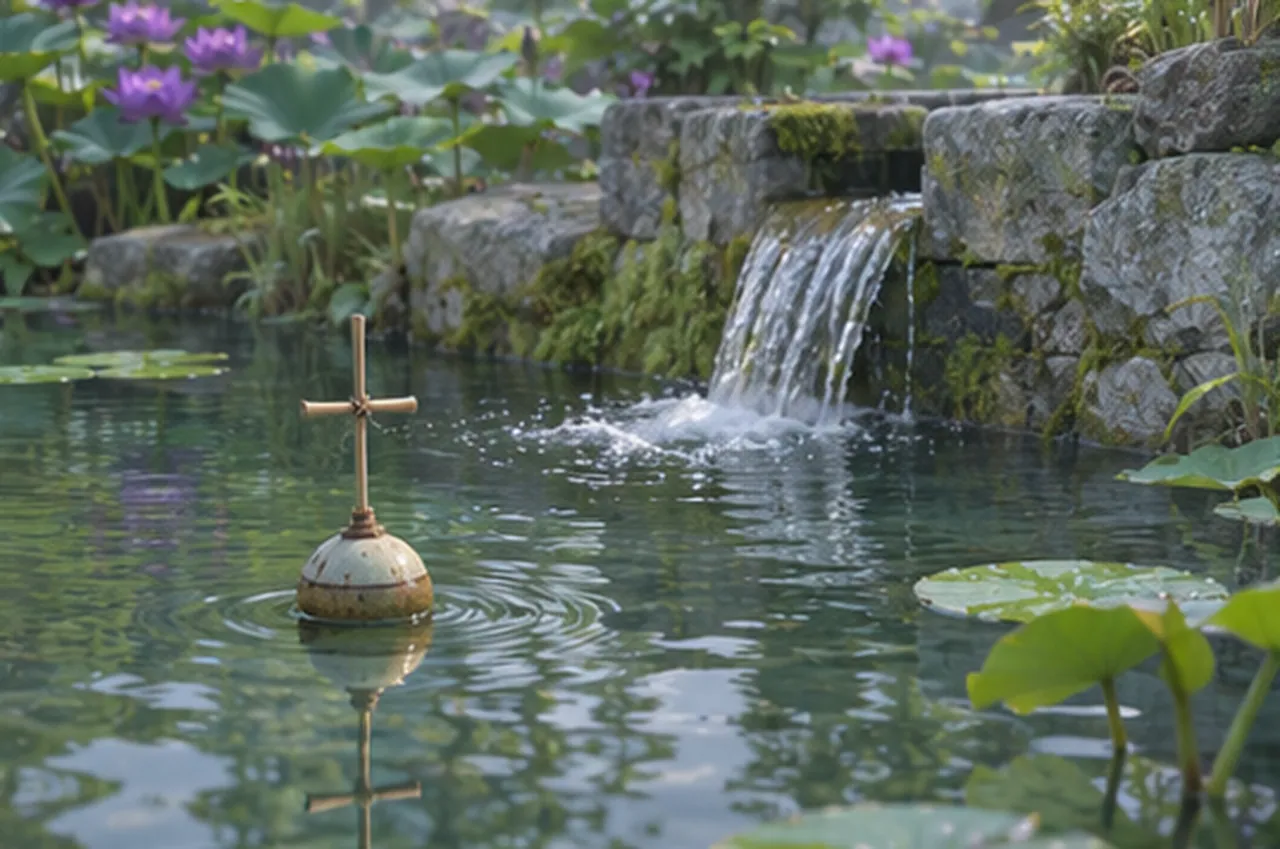
A small float lies at the outlet under the stone. It can be seen from an earlier part of the bank and again when the keeper looks from beside the far plants. In the first version it moved immediately when the near gate allowed a little extra water to leave. A person who checked after that move would find it in the later place but might have no way to know when it moved. We made a short observation sequence with a visible starting point and a second view farther around the basin. The float belongs to the fictional garden and gives a predictable reference for the next visual test.
Put the measure next to an old mark
The float starts beside a fixed line on the exposed edge of a stone. Before the extra water comes through, it moves only in an area close to that line. The keeper can see a slight swing as the new side route opens. After a short delay part of the stream enters the space beneath it. The float travels away from the mark toward a darker surface farther down. A reflective patch in front of it keeps the object visible without drawing an artificial path through the pond. From a higher angle there is still a small visible place where that movement begins.
In one early composition we let a set of narrow leaves cover most of the background behind the float. That gave the object a strong dark outline before it moved. When the current took it away from the leaves, it lost the outline in a broad light area. We moved the float a little nearer a sunken step. The older line remains easy to recognize, and the new position can also be seen near a contrast in the step below. This choice lets the viewer compare two locations using background details that are different enough to have some meaning in the garden.
Find it after a wider change
The far pool takes the new water slowly. Seen from its far side the route coming from the gate is relatively tight. The float can appear near a much brighter patch of surface when it enters the basin. That is a place to return to and check whether the earlier direction still makes sense. We give its pale top a small shadow underneath. The effect is visible when it passes over darker water and still holds up when the lighter view can nearly hide its outline. It was more reliable than making the whole object much brighter in one camera position.
After the flow settles there is room for the keeper to approach the lower step itself. The float rests where you can use the current view to find the old line again. At first we ended the run as the float reached that place. We now leave a short period after its movement. The wider result can continue changing a little while the reference sits in roughly the same place. That gives the player a chance to compare results near the two pools separately from their choice about what to open at the gate.
What changes in the next run
Reed Gate Spill uses this little marker in the view where the keeper can choose whether to widen a new side route. The Sideways Spill follows the first part of the water as it turns. We will next test two starting positions using the same camera from the bank. The result should help a player distinguish one patch of movement that belongs to the new outlet from an earlier movement already present at the far edge. Following the float is one part of watching that route, with the shape of the pond itself supplying the remaining context.